A local pro who knows heat pumps gets your details and gets in touch.
A heat pump in Idaho works harder in the hot, dry summers than most owners realize, and most homes here lean on gas for winter heat, so your heat pump may only be doing summer duty. That split in workload changes how it ages compared to a system running both sides of the year.
Most heat pumps last somewhere between 15 and 20 years. Where yours lands in that range depends on how it was sized for your house, how well it was installed, and whether it's had regular service. Two identical units can age differently just based on that.
If you're not sure how old your system is, check the sticker inside the access panel, or whether it came with the house when you bought it. That number matters more than how it sounds or feels right now, because a heat pump can run fine for a while even as it's losing efficiency underneath.
Power here is cheap, which means a heat pump nearing the end of its life might not show up as a painful bill the way it would somewhere else. That can mask the signs that it's time to think about replacement. Idaho's cheap electricity also means the calculation around replacing versus repairing looks different here than in a state where every kilowatt-hour stings.
Once you know roughly where your system stands, the next step is getting someone to look at the actual unit, not just the age on paper. A contractor who works on heat pumps in this climate can tell you what condition yours is really in and what your options are, matched to your house and how you use it. That's a conversation specific to your equipment, not a general rule about years. Getting that in motion is the easy part. Fill out the form, and a contractor who handles this in your area will reach out to you.
How long do heat pumps last in Idaho?
Your heat pump isn't the only thing keeping your house comfortable. Most homes in Idaho use gas furnaces for the hard work of winter, which means the heat pump might be running mostly in summer, cooling the house through the hot, dry months instead of carrying the whole year on its own. That changes what a normal lifespan looks like.
15 to 20 years, often longer if it's only cooling
A heat pump that runs year-round, heating in winter and cooling in summer, usually lasts 15 years. One that only handles cooling because a gas furnace covers the winter has an easier life. It skips the months of constant cycling that wear down the compressor, so 20 years or more isn't unusual. Idaho's hot, dry summers still put real hours on the compressor and the outdoor coil, but that's a few months of work instead of twelve. How long yours lasts also depends on upkeep over the years and whether it was sized and installed correctly to begin with. A unit that's undersized or oversized for the house wears out faster no matter how mild its workload is.
Running the way it should
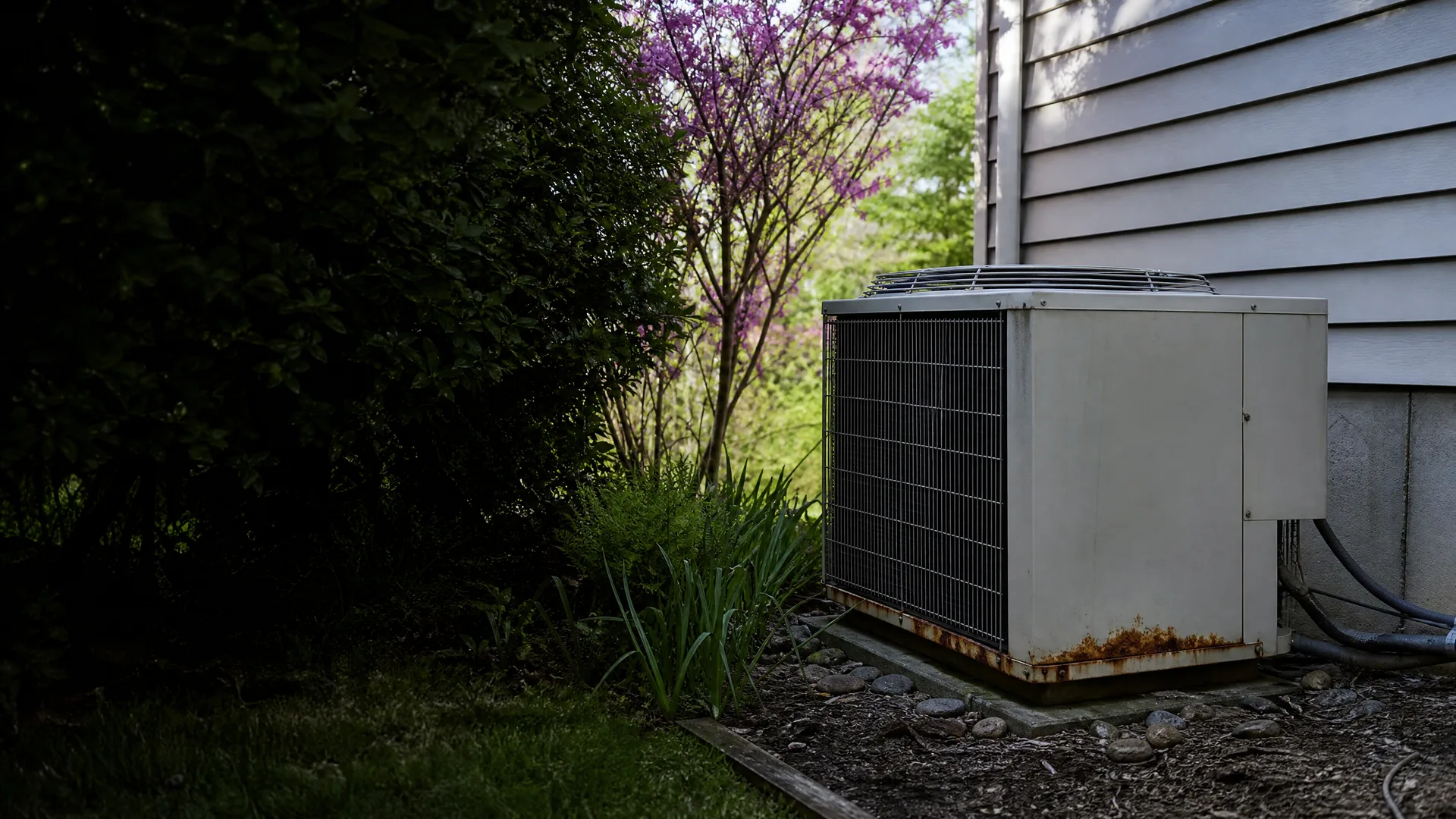
A heat pump that's pulling its weight looks unremarkable. The fan turns steadily, the pad underneath stays clean, and the lines running up to the disconnect box are tight and undamaged. No ice, no odd noise, no short cycling. This is what years of normal summer duty looks like.
Signs it's wearing out
Look at the unit itself before you look at the thermostat. Rust on the cabinet, a pad that's cracked or sinking, lines that sag or show wear where they meet the wall. If it's running longer than it used to just to hold the same temperature, the unit is telling you something before the bill does.
How your heat pump actually ages
A heat pump moves heat through a refrigerant cycle, switching direction with a reversing valve to cool or heat the house.
The outdoor unit's compressor is the part that works hardest, and in Idaho's dry heat it runs long hours all summer.
Since most homes here heat with gas, the heat pump's outdoor coil skips the heavy frost and defrost cycles that wear down units in colder, wetter climates.
Low-cost power in Idaho means the heat pump can run longer stretches without raising the bill much, which adds hours to the compressor's life.
A dirty outdoor coil forces the compressor to work harder to shed heat, which is why airflow across those fins matters more than most owners think.
The reversing valve gets used only when the system switches between heating and cooling, so a heat pump run mostly for summer cooling spares that valve a lot of cycling.
The refrigerant cycle is simple enough. Heat moves from one side to the other, and the reversing valve decides which direction that is. In summer, that means pulling heat out of the house and dumping it outside through the compressor and the outdoor coil. That compressor is the single hardest-working part in the whole system, and it's the one that determines how long the unit lasts overall.
What shortens a compressor's life is usually heat and strain, not just hours logged. Idaho's dry summer air actually works in the unit's favor here. There's no humidity load fighting the coil, so the compressor isn't struggling against moisture on top of heat. And because most houses here lean on a gas furnace once the weather turns, the heat pump isn't cycling through the defrost routine that colder, wetter climates demand. Defrost cycles are hard on a system. Skipping most of them means less wear building up over the years.
The reversing valve benefits too. It only gets exercised when the system flips between heating and cooling, so a unit that spends its winters idle and its summers cooling isn't asking that valve to switch back and forth all year.
None of that replaces basic upkeep. The outdoor coil still needs clear airflow across its fins. When dirt or grass clippings block that airflow, the compressor has to work harder to move the same amount of heat, and that strain adds up faster than the climate here would otherwise cause.
A clean coil like this moves heat the way it should, so the compressor inside isn't straining through Idaho's long, dry summer.
Fins packed with dirt choke airflow, and a compressor working against that can wear out years before it should.
You walk out to the side yard in April to turn on the hose and the unit stops you. The sun is still low enough to leave the grass wet, and against that the rust along the base of the cabinet stands out, a line of orange eating into the metal where the panel meets the pad. You crouch down and touch it and a little flakes off. The fan isn't running. Nothing is asking it to yet, not in April, but you find yourself thinking about July already, about whether this thing will carry the house through another dry Idaho summer or whether this is the year it doesn't. You straighten up, leave the hose running, and go back inside to look up someone who can tell you which it is.
A heat pump running mostly in summer here still puts in long hours, because Idaho's dry heat keeps the compressor working through most of the day for months at a stretch. That workload adds up differently than it would in a place where the same unit also carried the winter. Cheap power in Idaho means that long run time doesn't show up hard on the bill, so a unit can be straining well before the cost gives you any warning. The only real signals are the ones on the equipment itself, the sound it makes, the ice that shouldn't be there, the rust creeping along the cabinet. If your heat pump is getting old or showing any of that, it's worth finding out now whether it needs replacing before a hot stretch forces the question. Someone who installs these for a living can look at what you have and tell you where it actually stands.
A heat pump used only for cooling still logs long runtimes here, since Idaho summers stay hot and dry for months and the compressor has no break in between.
Run hours add up the same whether they come in one season or two, so a unit working hard all summer can wear down close to one splitting time with the furnace.
Summer-only duty
If gas carries your winter heat, the heat pump's compressor only logs hours from spring through fall. Fewer months running still means real wear, since those months are hot and dry.
If the heat pump also carries your winter heat, the compressor runs in both seasons with no real break. More months working, more hours stacked on the same parts.
What are you noticing about your heat pump right now
Maybe nothing yet, and that's worth checking anyway. But if something sent you looking, it's usually one of a few things. The outdoor fan sounds different, a rattle or a hum that wasn't there before. The unit runs longer than it used to on a day that isn't even that hot. Ice shows up on the coil in weather that shouldn't allow it. The air coming out feels weaker, or barely cooler than the air going in. Sometimes it's simpler: the cabinet has rust creeping along the base, or the pad it sits on has tilted. None of these mean it's done. They mean it's working harder than it should to do the same job, and in Idaho's dry summer heat, that extra strain is what shortens a compressor's life.
A summer dew point of 42°F, averaged across June, July and August, is what climate records for Idaho show. That's dry air, the kind where sweat evaporates fast and the heat still feels bearable even on a hot afternoon. For your heat pump, dry air like that means the coil outside sheds heat easily, with less moisture clinging to the fins to slow things down. The strain comes from a different direction: long stretches of running time, day after day, not humidity fighting the system. You'd notice it as a unit that keeps pace fine on any single afternoon, but one that's logged a lot of hours by the time fall comes around.
NASA POWER T2MDEW county cells weighted by homes
Before you get your heat pump installationAfter you get your heat pump installation
Power costs 11.83 cents per kilowatt-hour statewide
At 11.83 cents per kilowatt-hour, running your heat pump through a long, dry Idaho summer costs less here than it would almost anywhere else. That lower rate is part of why some owners push an aging compressor instead of replacing it, which can shorten what's left of its life.
EIA-861 2025 statewide residential average
A heat pump in Idaho earns its years in the summer months, running cooling duty while gas handles the cold. How long yours lasts comes down to what those dry summers have done to the compressor and whether the coil and refrigerant charge have been kept in shape. A unit that's been running clean, quiet, and iced up never, can keep going a good while longer. One that's rusting at the base, short cycling, or straining through every afternoon is closer to the end than the calendar alone would suggest. You don't have to figure out which one is true by yourself. Once you send the form, you're done hunting for someone to look at it. A contractor who knows these systems and this climate takes it from there, and the decision about repair or replacement stops being a guess you're making alone.
A pro who works on heat pumps
Send the form and the search for an installer is over.