










Repair or replace a heat pump in Idaho

Send the form and the search for an installer is over.

Hand off my installation

A heat pump in Idaho earns its keep in summer, running your AC through the hot, dry stretch of the year, and it's worth fixing more often than not. Most repairs, like a bad capacitor, a stuck reversing valve, or a dirty coil, cost a fraction of a new system and get the air moving again the same week. Replacement makes more sense once the compressor itself fails or the unit is old enough that repairs keep coming back. Since most homes here heat with gas, the heat pump's winter job is smaller, so a unit that struggles a little in the cold isn't the same emergency it would be somewhere colder. What matters more is whether it still cools the house well once the heat sets in. A contractor who looks at it in person can tell you which side of that line your system is on.

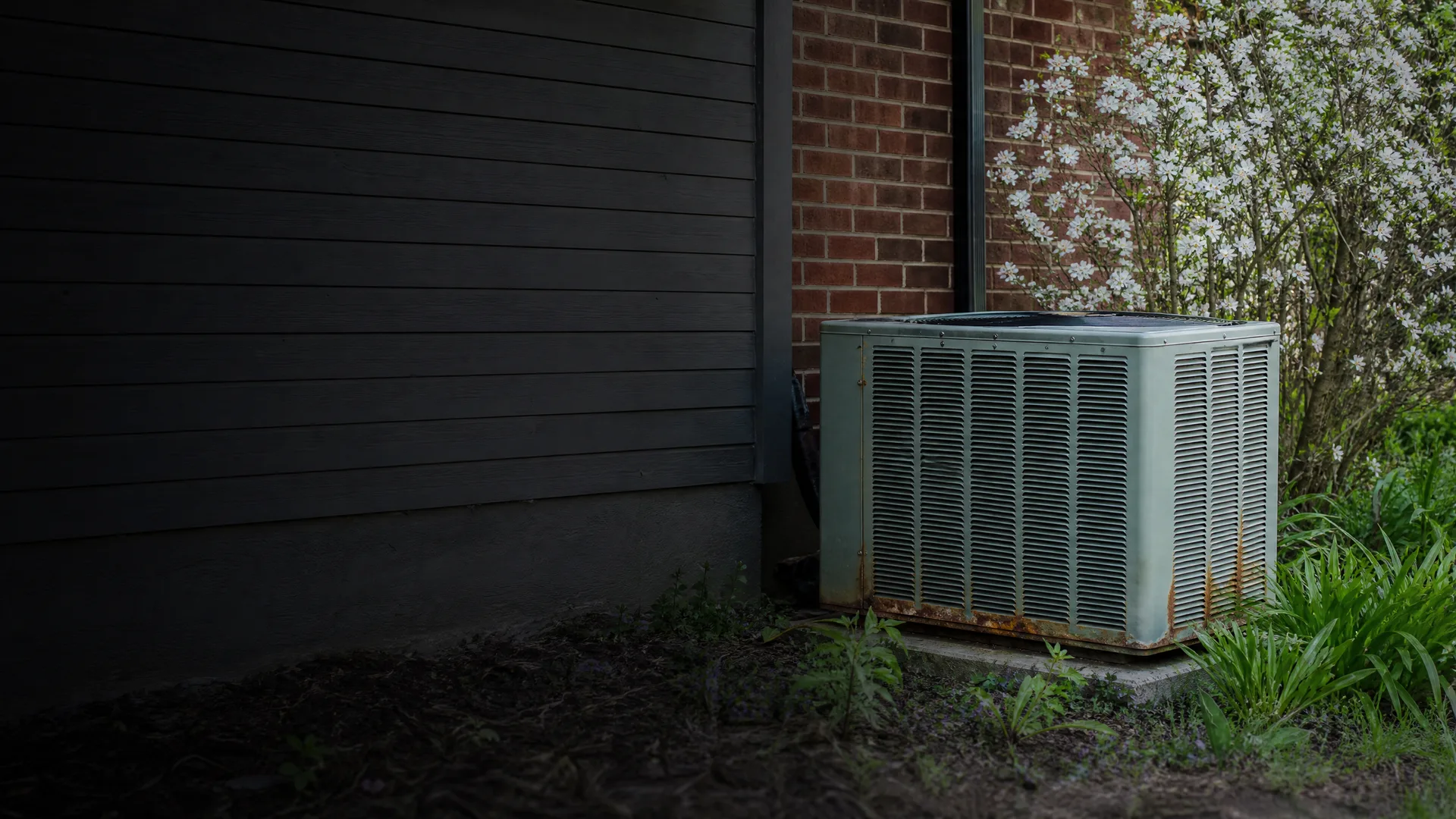
An outdoor air conditioning condenser unit on a concrete pad beside a dark horizontal-siding wall and a brick wall, with flowering shrubs and grass nearby.

You're out checking the sprinkler line when you see it again, that rust creeping along the base of the unit outside. It's a mild spring morning, the kind where you don't need the AC yet, but you know July is coming. You crouch down and press a thumb near the bottom panel, and it gives a little more than it should. The fan kicks on fine when you nudge the thermostat inside, so it's still running. You stand there a minute, thinking about the summer ahead, the dry heat that'll have this thing working every afternoon, and you wonder how much longer that base has in it before it's more than rust.

Repair or Replace Your Heat Pump

Repair

  • A cracked capacitor or a stuck reversing valve usually gets your heat pump running again in one visit.
  • If the unit is still under warranty, repair costs stay low and replacement makes less sense right now.
  • A dirty coil or a low charge won't cool the same once August heat sets in, but both are fixable.
  • If the compressor itself has failed, repair costs climb fast and start closing in on a new system's price.
  • A heat pump that's only a few years old is worth fixing almost every time something goes wrong.

Replace

  • Once the compressor is gone, most of the unit's value is gone with it, and a new system costs less over time than chasing repairs.
  • An older heat pump that struggles to keep the house cool through July and August may be worth retiring early.
  • Power here is cheap, so a new heat pump won't cut your bill the way it might somewhere else, but it will run quieter and keep up better.
  • A unit that's needed two or three service calls in the last year is telling you something about what's coming next.
  • Since most homes here heat with gas, a new heat pump only needs to carry the cooling load, which is one less thing working against it in winter.
A woman in a knitted shawl sits in a living room with a fireplace, shelves, a sofa with cushions, and a lamp by a bright window, looking off to the side.
A woman with long brown wavy hair in a green shirt over a white top stands in a living room with built-in white shelves, a ceiling fan, a potted plant and a sliding glass door.
A woman with shoulder-length gray-streaked hair in a light gray knit sweater stands smiling and looking off to the side in a living room with a sofa, houseplant, framed picture, and sunlit sliding glass door.
A woman with shoulder-length curly gray hair wearing a gray knit sweater stands near a window with a sheer curtain, looking to the side, with a blurred interior room behind her.
A gray outdoor heat pump unit on a concrete pad beside a house with horizontal lap siding, connected by conduit and a flexible line to a wall-mounted disconnect box, with low shrubs and mulch nearby.
The fan grille is clean, the pad is level, and the lines running to the wall disconnect show no wear.
An outdoor air conditioner condenser unit on a concrete pad beside a house with horizontal siding above a concrete block foundation, with insulated refrigerant lines and a vertical white pipe on the wall.
Rust along the base and refrigerant lines sitting against the block foundation are signs this unit is on its way out.

A heat pump doesn't make cold air. It moves heat out of your house and dumps it outside, the same job your AC would do, just through a different setup. The reversing valve is what tells the system which direction to send that heat, and a stuck valve leaves you with warm air blowing or a unit that won't shut off. Refrigerant is what actually carries the heat through the coils, so if a slow leak drops the charge, cooling gets weaker even though the compressor and fans sound fine. The outdoor coil has to push that heat into the air, and if it's packed with a summer's worth of dust or cottonwood fluff, it can't shed heat fast enough to keep up. Before the fan motors or compressor even turn on, a small part called the capacitor has to deliver a jolt to start them. When that capacitor weakens, you get a unit that hums but never kicks on. The compressor itself is the most expensive part in the system, so it's usually the first thing checked when a unit won't hold its charge.

How a heat pump cools your home

  • A heat pump moves heat instead of making it, so in summer it pulls heat out of your house the same way your AC does.
  • The reversing valve is what switches the system between cooling and heating, and when it sticks, the unit can blow warm air or run nonstop trying to cool.
  • Refrigerant carries the heat through the coils, so a low charge from a slow leak means weaker cooling even if the fans and compressor sound normal.
  • The outdoor coil has to shed heat into the dry summer air, and a season of dust or cottonwood fluff packed into the fins cuts that cooling short.
  • The compressor is the part that costs the most to replace, so a technician checks it first when a unit won't hold a charge.
  • A capacitor gives the compressor and fan motors the jolt they need to start, and a weak one shows up as a unit that hums but won't kick on.
A woman and a sleeping child wrapped together in a cream knitted blanket on a couch, with a potted plant, framed photo and lit lamp in the background.
An older woman with gray hair in a bun and glasses, wearing a beige knit sweater, smiles while looking to the side in a warmly lit kitchen, with a loaf of bread on the counter in the foreground and a snowy scene outside the window.

Let someone else find the pro

One installer gets your project, so there's no bidding war over it.

No charge to send it. You decide if you hire them.

Why the compressor matters most

The compressor is the most expensive part in your heat pump, and it's the one that decides whether repair makes sense. A failed compressor can cost close to what a new system runs, because swapping one means breaking into the refrigerant lines and recovering the charge. Most other failures, a capacitor, a contactor, a fan motor, are small jobs next to that. So the real question with an older unit isn't what's wrong today. It's whether the compressor is the next thing to go. A tech who's worked on your model before can usually tell from the sound it makes.


Age tells you less than it seems

Two heat pumps installed the same year can be in very different shape, because what wears a unit down is how hard it's run, not just how long it's sat outside. In Idaho, that means summer does most of the work, since most homes here heat with gas and lean on the heat pump mainly for cooling. A unit that's carried ten hot, dry summers has earned its wear differently than one that's also handled winter heating loads. Check the install date if you have it, but let a local tech's look at the coil and the compressor settle the question.

An outdoor air conditioning condenser unit with dusty coils sits on a concrete pad against light horizontal siding, with an electrical disconnect box and refrigerant lines on the wall and a shrub and mulch at left.
Before you get your heat pump installation
A gray outdoor heat pump unit on a concrete pad beside a house with horizontal lap siding, with a conduit running to a wall-mounted disconnect box and a green shrub to the left.
After you get your heat pump installation
A single-story house with gray vinyl siding, dark shingled gable roofs, and white-trimmed windows, set behind a partly dry green lawn under a clear blue sky.

A 42°F dew point is what your heat pump is up against most summer afternoons here, and that's a dry number, as far as dew points go. Dry air gives the unit an easier job. It's pulling heat out of the house, not fighting moisture at the same time, so the coil isn't working as hard to wring water out of the air on top of cooling it. That's part of why a dirty coil shows up fast in a place like this. With dry air moving through it all summer, dust collects, and a coil that's caked gets worse at shedding heat. If the air coming out feels warm, or the unit's running longer than it used to, that coil is worth a look before anything else. Source: NOAA climate normals for Idaho.

NASA POWER T2MDEW county cells weighted by homes

Why does my heat pump blow cold air before it warms up?

You've got the heat kicked on and for the first minute or so, the air coming out of the vents feels cool, almost like the AC is still running. It makes you wonder if something's wrong with the unit, especially if you're about to put money into a new system and don't want to inherit a problem.

That cold air at startup is normal, it's the defrost cycle reversing

A heat pump runs the same reversing valve that switches it to cooling in summer. When it kicks on for heat, that valve has to flip positions, and for a short stretch the air blowing out hasn't caught up to the change yet. You'll feel it as cool or barely warm air before it turns hot. If the valve is sticking or wearing out, that cold air lasts longer than it should, or the unit stays stuck in one mode and won't switch at all. That's a different problem than the normal startup lag, and it usually shows up as rooms that won't heat even though the unit sounds like it's running fine.

  1. A technician checks the refrigerant charge and pressures at the outdoor unit.

  2. They test the reversing valve to see if it switches cleanly.

  3. The compressor and capacitor get tested under a running load.

  4. You get a straight answer on repair versus a new system.

Power costs 11.83 cents per kilowatt-hour statewide

At 11.83 cents a kilowatt-hour, running your heat pump costs less here than it does for most of the country. That's why a straight electric setup makes sense in Idaho even with gas so common. When it's time to replace the unit, that low rate is a point in the heat pump's favor.

EIA-861 2025 statewide residential average

Repair or Replace, Decided

  • A working capacitor, reversing valve, or coil almost always points to repair over replacement.
  • A failed compressor or a unit rusted through at the base is the point where replacement wins out.
  • Idaho's dry summer heat and cheap power both favor keeping a heat pump running on electricity.
  • A local contractor who services these units every summer season knows which part tends to fail first.
  • Sending one request means one licensed local contractor looking at your unit, not a string of calls to field.
  • Once you know which side your unit falls on, the next step is getting eyes on it in person.

Most heat pumps in Idaho are worth fixing. A capacitor, a stuck reversing valve, a dirty coil, these are parts a contractor replaces in one visit, and the unit goes back to cooling your house through the dry heat the same afternoon. Replacement only wins when the compressor has failed or the cabinet has rusted through at the base. That's the line. Everything else on this page has been about which side of it your unit falls on.

Once you know that, the next step is getting someone out to look at it, and this is where having one contractor matters more than people expect. Heat pumps in Idaho run on electricity through summer, cheap power or not, and whoever comes out to your place needs to have seen what a season of that does to a coil or a reversing valve. A contractor who works on these units all summer has a feel for which part on a unit your age tends to go first, and that's not something you get from a company that mostly installs furnaces. Sending one request puts one licensed local contractor on your unit, not a handful of competing bids landing in your inbox at once. You get a straight look at what's actually wrong, from someone who knows what's normal for a unit that's been running on Idaho summers, and an answer you can act on instead of a list of quotes to sort through.

A gray outdoor condenser unit on a concrete pad beside a house with horizontal lap siding, bordered by mulch, shrubs and a mowed lawn.

One request and it's handed off

Step 1 of 3: Equipment