A heat pump tune-up covers the coils, the refrigerant charge, the defrost cycle, the electrical connections and the airflow through the system. The tech checks the outdoor unit for a clean coil and proper airflow, verifies the refrigerant level, and tests the defrost control so the unit switches out of heating mode and melts off frost before it builds into ice. That part matters here, because Idaho winters put the heat pump through real cold, and a defrost cycle that isn't working right lets ice take over the outdoor coil until the system can't pull heat from the air at all. The tech also checks the thermostat response, the indoor blower, and the electrical contacts for wear, since a loose connection or a weak capacitor is what usually causes a no-start call. Summers here are hot and dry, so the same visit confirms the system cools the way it should before that heat arrives. Catching a worn part in spring or fall means it gets replaced on a schedule, not during a week when you need the system most.
Running clean
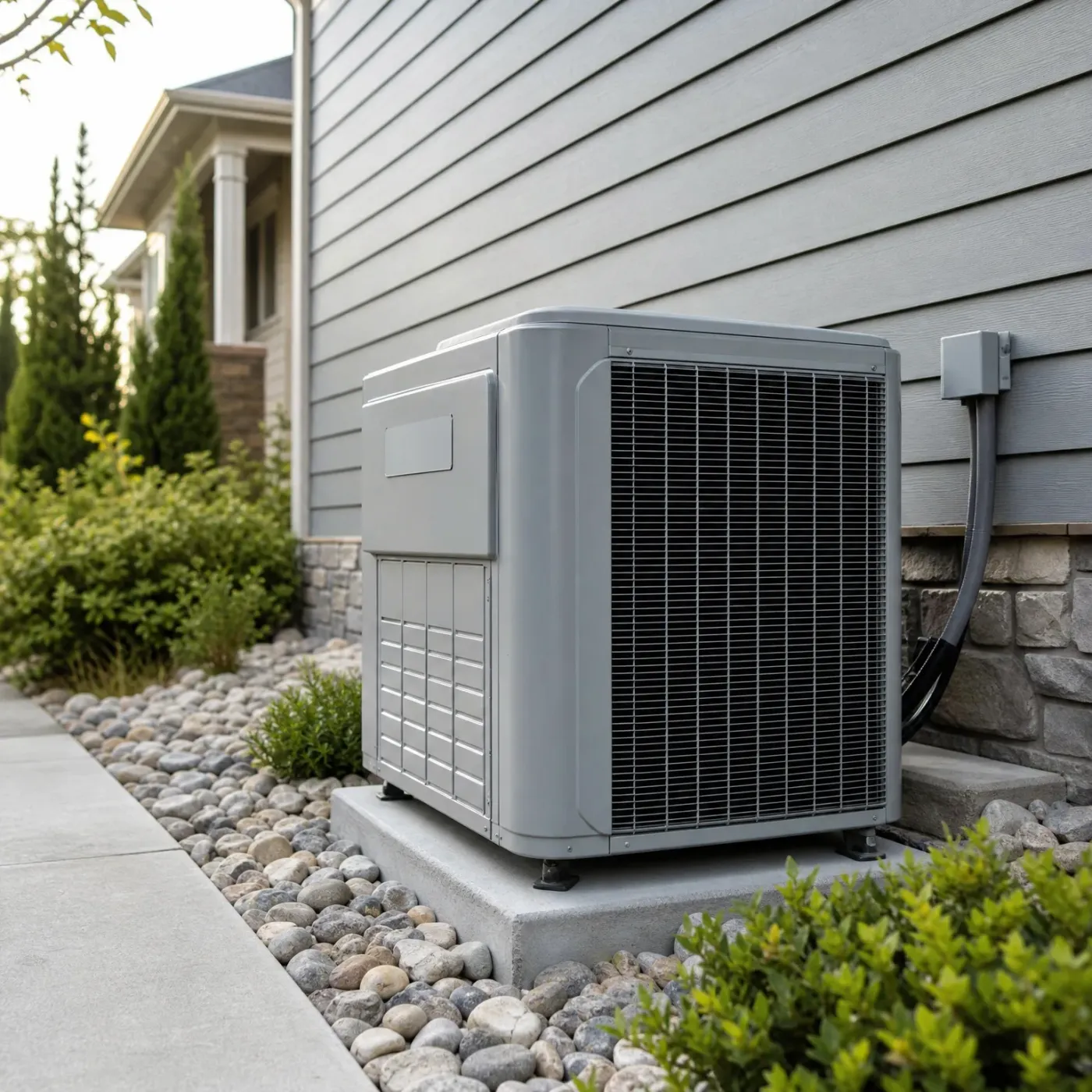
This is a heat pump keeping up its end. The coil is clear, the pad is solid, the lines are tight to the wall. Idaho summers run hot and dry, and a unit that gets serviced each year holds its charge and keeps the coil clean enough to move the air it needs to move.
Running down
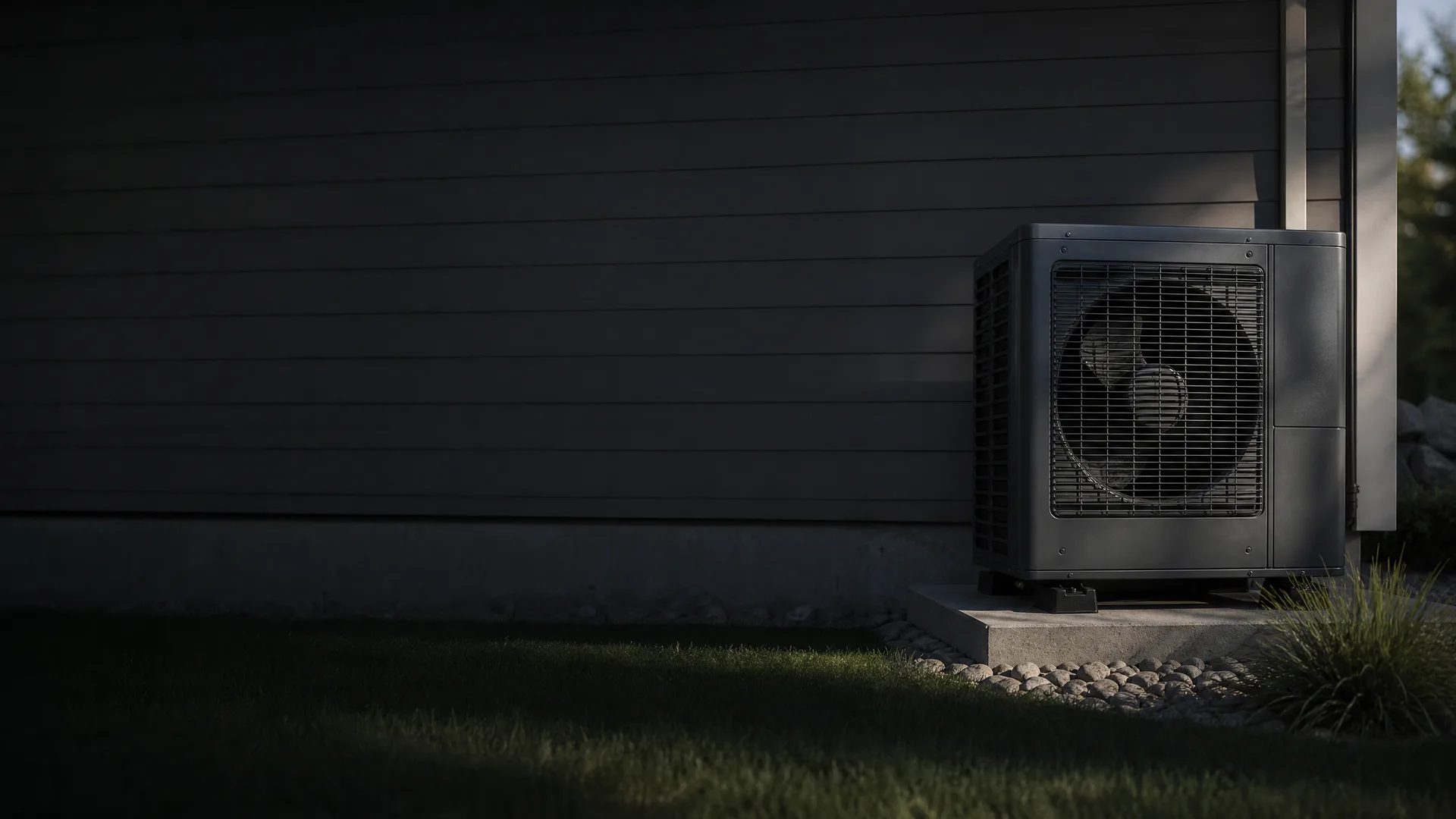
Weathering like this usually means the coil has gone years without a real cleaning. Refrigerant lines sitting against block and showing wear are worth a look too. Left alone, a heat pump in this shape works harder in July and struggles to pull heat out of cold winter air.
What the tech actually checks
The tech reverses the reversing valve to check it switches cleanly between heating and cooling mode.
Defrost control board and sensor get tested to confirm the unit senses ice on the outdoor coil and clears it on schedule.
Contactors and capacitors get checked under load, since a weak capacitor is a common reason a compressor struggles to start.
Refrigerant charge gets checked against the system's target subcooling or superheat number, not just a gauge glance.
The auxiliary or backup heat strip gets tested so it only kicks in when the heat pump actually needs the help.
Return air temperature gets measured against supply air to confirm the system is actually moving the heat it should.
A heat pump does something a furnace never has to do: it switches direction. The reversing valve is what makes that happen, sending refrigerant one way to pull heat from the air outside and the other way to dump heat outside in summer. If that valve sticks, you get a unit stuck in one mode no matter what the thermostat asks for. The defrost board works alongside it, watching the outdoor coil for ice and timing when the unit should pause and clear it. A board that misreads the sensor either lets frost build up and block airflow, or runs defrost when there's no ice to clear, which just wastes heat you paid for. Inside the electrical panel, the contactors and capacitors get tested while the system is running, not just looked at sitting still, because a capacitor can measure fine at rest and still fail to push the compressor into a hard start. The refrigerant charge gets checked against the number that system is supposed to run at, using subcooling or superheat readings rather than a quick look at the gauge. Too little or too much charge both cost you capacity. The backup heat strip gets tested too, since it should only fire when the heat pump itself can't keep up, not every time the compressor cycles. Last, the tech measures the temperature difference between the air going back into the system and the air coming out, which is the real test of whether all of the above is actually working together.
Power costs 11.83 cents per kilowatt-hour statewide
At 11.83 cents a kilowatt-hour, your heat pump is cheap to run compared to the rest of the country, but a dirty coil or low charge still makes it work harder for the same heat or cooling. A tune-up keeps that cost from creeping up on you.
EIA-861 2025 statewide residential average
Why the defrost cycle matters here
Idaho winters put frost on that outdoor coil, and the unit has to sense it and clear it on its own. A tune-up checks the defrost control board and the sensor that tells it ice has built up. If that sensor reads wrong, the unit either defrosts when it doesn't need to, wasting heat, or skips a defrost cycle it needed, and ice builds up on the coil until it can't pull heat from the air at all. This is the part of a heat pump a furnace never has to do.
What the refrigerant charge affects
A heat pump moves heat instead of making it, and the refrigerant is what carries that heat from one coil to the other. Too little charge and the system can't move enough heat in either direction, summer or winter. A tune-up checks the charge against what the unit calls for, not just whether it's low. Catching this early matters more here than in a furnace-only home, since this same charge is doing the work of both your heating and your cooling all year.
Explain it one time
A licensed local pro takes the request for your heat pump tune-up.
Skip calling around to set up a heat pump tune-up.
A clean pad, clear conduit, and a coil free of grime, this is what keeps that compressor running efficiently through an Idaho summer.
Grime on the coil and bare soil where mulch should be are both signs this unit has gone without service long enough to cost you.
Does the tech check the thermostat during a heat pump tune-up?
You've got a thermostat on the wall and a heat pump outside, and you want to know if the tune-up actually looks at how the two talk to each other, not just the outdoor unit. A heat pump that's slow to switch between heating and cooling, or that never quite hits the set temperature, often points back to that connection rather than the compressor itself.
Yes, the tech checks the thermostat's calibration and its signal to the heat pump
The tech confirms the thermostat is reading the room temperature correctly and sending the right call to the heat pump, whether that's for heating, cooling, or the reversing valve switching between the two. A thermostat that's out of calibration by even a couple degrees will run your system longer than it needs to, which matters when you're paying for every kilowatt-hour even at Idaho's low rates. If you've got a heat pump thermostat with an emergency heat setting, the tech checks that it's wired correctly and isn't stuck engaging backup heat when it shouldn't be. A bad connection here shows up as short cycling or a system that won't hold its set point.
1
Tech shuts off power to the unit before opening any panels.
2
Outdoor coil gets inspected and washed free of dirt and grass clippings.
3
Refrigerant charge gets checked against what the unit calls for.
4
Compressor, fan motor and contactors get tested under a running load.
What a tune-up covers, in plain terms
A heat pump tune-up in Idaho comes down to the coil, the refrigerant charge, the defrost cycle, and the electrical parts that keep the compressor and fan running. A tech who checks all of that has covered what actually fails on this equipment, year to year, in this climate.
Finding someone qualified to do that work takes its own time. You'd normally be calling around, explaining the same thing about your unit to three or four companies, then sitting with quotes trying to tell them apart. This connects you with one licensed Idaho contractor who works on heat pumps all year and already knows what tends to go wrong on them here. No extra calls, no repeating yourself, no pile of quotes to sort through.