
Normal defrost cycle
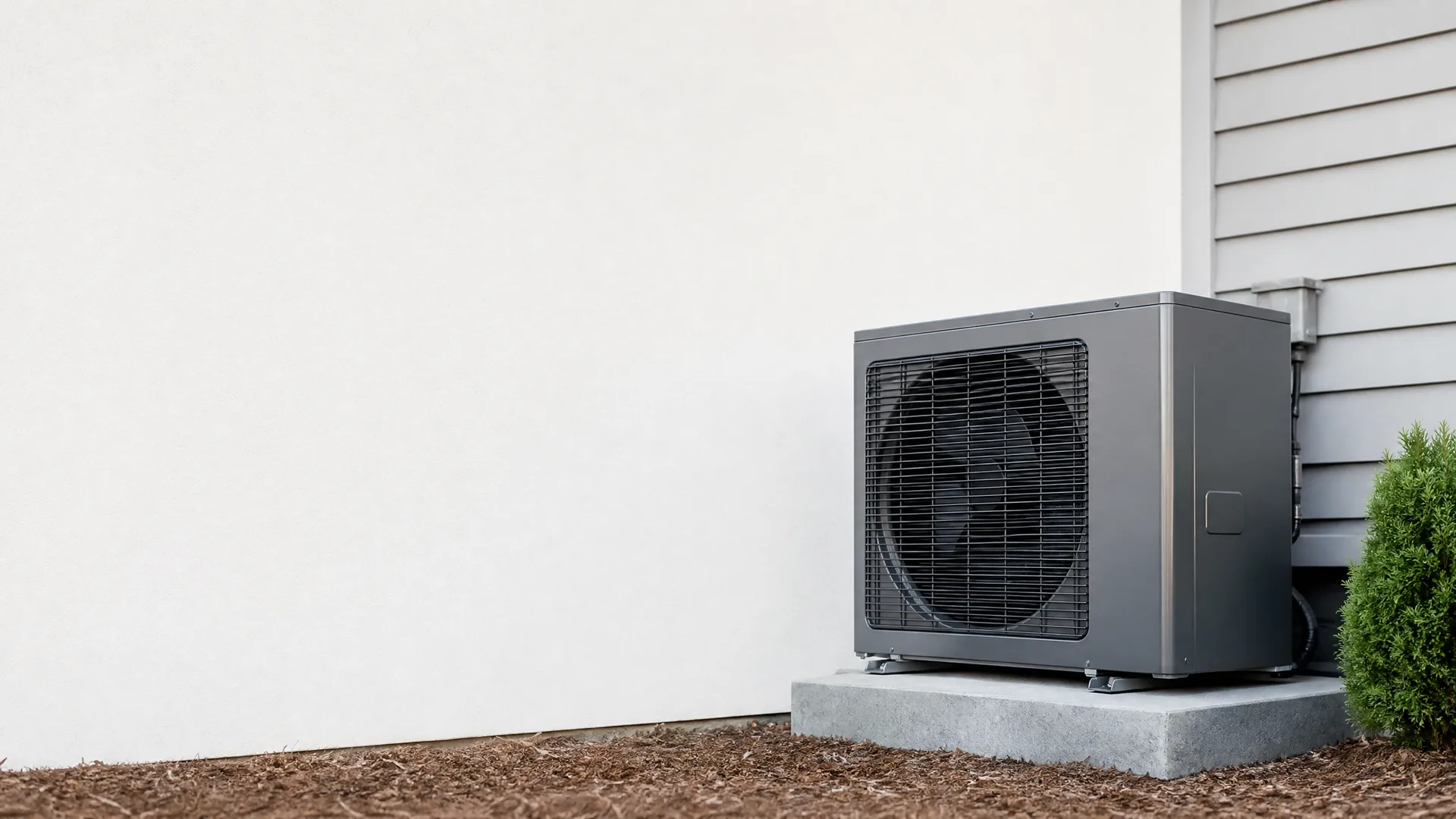
This is what a healthy heat pump looks like on a cold Idaho morning. Light frost on the fins, a clean coil, nothing blocking the fan. Give it until afternoon and the frost is gone on its own, no help needed.

Idaho winters push outdoor temperatures low enough that your heat pump's outdoor unit can end up coated in frost or ice, sometimes thick enough to cover the coil or stop the fan from turning. It is normal to see some frost. What worries people is when it builds up heavy and stays, especially overnight when the temperature drops hard.
Your heat pump pulls heat out of outside air, and in cold weather that process cools the outdoor coil below freezing, so some frost is expected on a cold Idaho night. The unit is built to handle this. It runs a defrost cycle on its own, switching briefly into cooling mode to melt the ice off the coil, then goes back to heating. If the ice keeps building instead of clearing, something is stopping that cycle from working: a stuck reversing valve, a failed defrost sensor, a fan that isn't moving air across the coil, or low refrigerant. Left alone, a coil buried in ice can't pull heat from the air, and the system either runs constantly without warming your house or shuts down.

Every heat pump in Idaho frosts up on cold nights. The outdoor coil runs colder than the air around it, so moisture in the air lands on it and freezes, the same way a cold glass fogs up. A defrost cycle reverses the system for a few minutes, melts that layer off, then switches back to heating. A thin white coating that clears on its own is the system doing its job.
If the coil is packed in ice, or the fan is frozen solid and not spinning, the defrost cycle isn't completing. That can come from a failed defrost sensor, a reversing valve that won't switch, or a fan motor that's seized. Left alone, the ice keeps building and blocks airflow across the coil entirely, which forces the system to work harder and can leave you with no heat at all on a cold night.
Walk outside and look at the outdoor unit. If you see a thin white coating that's gone by afternoon, that's just your heat pump doing what it does on a cold Idaho night. But if the ice is thick, covers the coil completely, or has built up around the base and the fan isn't spinning, something is wrong. You might hear the unit running but feel barely any warm air from your vents, or notice it short cycling, kicking on and off every few minutes. Left alone, a unit stuck in ice can't pull heat from outside air at all, and it can strain the compressor trying to work through it. That's a repair, not something that clears on its own by morning.
This is what a healthy heat pump looks like on a cold Idaho morning. Light frost on the fins, a clean coil, nothing blocking the fan. Give it until afternoon and the frost is gone on its own, no help needed.

Dirt and grime built up on these fins, and that changes how the coil sheds heat. Once a coil is coated like this, ice can form faster than the defrost cycle clears it, and it stacks up instead of melting off.

This is a heat pump doing its job on a cold Idaho morning. A light frost sits on the fan grille, the fan spins free, and the lines running to the disconnect are doing nothing unusual. Leave it alone and it clears on its own.

Here the ice has built up around the base and up the side of the cabinet, not just the fins. If your unit looks like this and the fan won't turn, the defrost cycle isn't keeping up anymore. That's a repair call, not a wait-it-out.

When the outdoor coil gets cold enough to frost, the system reverses itself for a few minutes. It runs like an air conditioner outside instead of a heat pump, pushing hot refrigerant through the outdoor coil to melt the ice off it. That's why you might see steam coming off the unit, or hear it sound different for a bit. The indoor air handler usually kicks on a strip of backup heat during this, so the air coming out of your vents doesn't go cold while the outdoor coil is busy thawing itself.
A heat pump that can't finish that cycle is the problem, not the ice itself. If the reversing valve sticks, or a sensor that's supposed to tell the system how cold the coil is fails, the defrost cycle never starts, or starts and doesn't stop. Instead of calling around Idaho for someone who works on heat pumps, checks the reversing valve, and tells you honestly whether it's that or something else, send the form and let a contractor who actually knows this equipment get back to you.





A heat pump caked in ice on a January morning in Idaho won't heat your house, and gas backup or not, that's a cold house until someone deals with it. You could start calling HVAC companies around town, explaining the ice, the fan that won't turn, how long it's been like this, and then do it again for the next company when the first one can't come out for days. Or you could send one request and let a licensed contractor who works on heat pumps in this kind of cold take it from there. That's the part that's gone once you send the form: the calling around, the repeating yourself, the guessing at who's worth calling back. The ice on your unit still needs a contractor's hands on it, but finding that contractor stops being something you have to do today.

The dry air that makes Idaho summers easy on your skin works against your heat pump in winter. Averaged over the summer months here, the dew point sits at 42°F, which is low, and that same dry pattern carries into the cold months when the air holds less moisture to begin with. You'd think less moisture means less frost. But a heat pump pulls whatever moisture is there straight onto a coil colder than the air itself, so even dry Idaho air freezes onto it fast once temperatures drop. Source: regional climate averages.
NASA POWER T2MDEW county cells weighted by homes


If the ice is thin and gone by afternoon, you don't need anyone. Leave it. But once it's thick enough to cover the coil or stop that fan blade from turning, waiting costs you more than a service call would. A unit running against ice that won't clear can push the compressor harder than it's built for, and that's a repair that costs a lot more than the one you're avoiding. Watching it another day to see if it melts on its own makes sense for frost. It doesn't make sense once you can't see the fins anymore.
Idaho winters don't wait for a convenient day, and a heat pump stuck in ice doesn't fix itself before the next cold snap. Once you send the form, you're done hunting for someone who answers the phone, done explaining the same frost and fan problem to three different companies, done lining up quotes against each other. A licensed contractor gets matched to you and takes it from there. That's the part that disappears, not the repair itself, and not how fast anyone shows up. What goes away is the work of finding them in the first place.
At 11.83 cents a kilowatt-hour, running your heat pump's defrost cycle a few extra times on a cold night barely moves your bill. What costs you is a frozen coil forcing the backup heat to carry the house for hours while nobody's fixed the real problem.
EIA-861 2025 statewide residential average
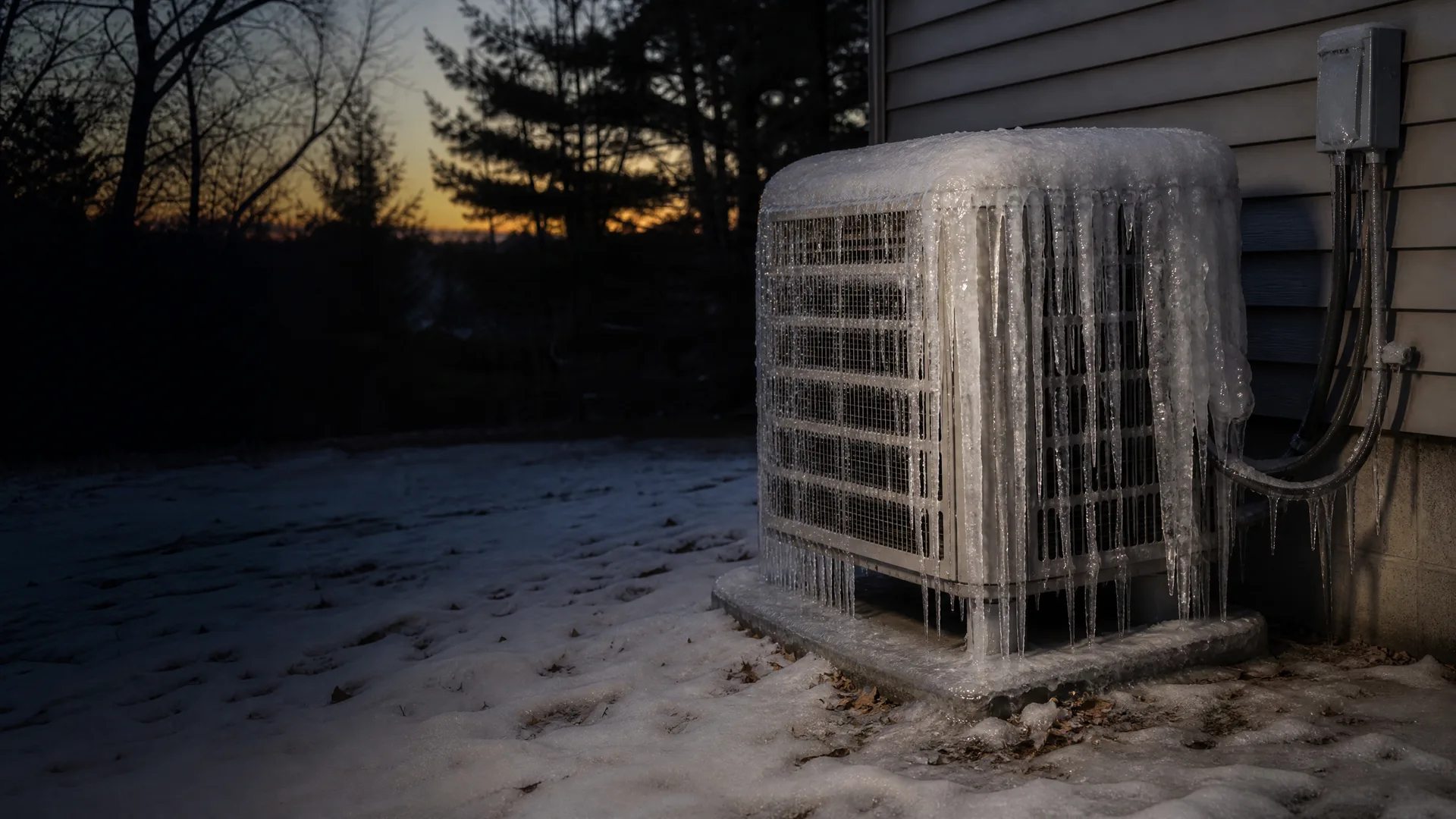
You're out for the trash can before work, still dark, breath fogging in front of you. The side yard is quiet except for the hum of the heat pump, and when you glance over you stop. The whole cabinet is white, not the thin frost you've seen before but a solid shell climbing up past the fins, thick enough that you can't see the coil underneath anymore. The fan blade has a ridge of ice built across it. You nudge the housing with your boot and nothing moves. Inside, the house feels a shade cooler than it should at six in the morning, and you're already doing the math on how long that's been running like this.
A thin white coat of frost that's gone by afternoon is your heat pump working the way it's supposed to on a cold Idaho night. Ice thick enough to cover the coil or stop the fan from turning is not, and it won't clear on its own no matter how long you leave it. That's the whole answer. Once you know which one you're looking at, you know whether to leave the unit alone or get someone out to it. If it's the second one, the part you don't have to do is the search: no scrolling through company after company, no calling around to find who even answers the phone this time of year, no explaining the ice and the fan and how long it's been like that over and over to whoever picks up, no sitting with three quotes trying to guess which one is honest. Send the form once and that work is off your plate. The ice on the unit is still there to deal with. Finding who deals with it isn't.
Explain the job once and skip repeating it on every call.
No charge to send it. You decide if you hire them.