
Why your heat pump won't turn on in Idaho

Step 1 of 3: Equipment

Why won't my heat pump turn on in Idaho?

Idaho winters ask a lot of a heat pump, and when yours won't start, it usually happens on a cold morning when you need it most. You check the thermostat, flip the breaker, and nothing changes. Before you call anyone, it helps to know what actually stops a heat pump cold and whether this is something a thermostat setting can fix or a job for someone who works on these systems.

Most likely a lockout from the outdoor unit or a tripped breaker

A heat pump that won't start usually has one of two problems. Either the outdoor unit has locked itself out after sensing something wrong, like a frozen coil or a failed sensor, or power isn't reaching the system at all because of a tripped breaker or a blown fuse at the disconnect box. Since gas heat is common in Idaho homes, your heat pump may share a system with a furnace, and a wiring or control board issue on one side can stop the other from running. Cold snaps put extra strain on the outdoor unit, and that's often when a weak component finally gives out. Checking the breaker is worth doing first. If power is fine and it still won't start, the problem is inside the system and needs someone who can diagnose it.

A beige outdoor air conditioning condenser unit on a concrete pad beside a house with horizontal vinyl siding, with refrigerant lines and a disconnect box on the wall, surrounded by dark mulch and a green shrub at left.

Running as it should

The outdoor unit hums along, the fan turning, air moving across the coil. The disconnect box stays untouched, the conduit intact, nothing tripped. On a cold Idaho morning it starts when the thermostat calls for it and keeps the house at temperature without you thinking about it.


An outdoor air conditioner condenser unit on a concrete pad beside a house with horizontal lap siding, with a shrub to the left, bare dirt in front, and conduit and a metal disconnect box on the wall.

Won't start

The outdoor unit sits quiet. No fan, no hum, nothing drawing power through the conduit to the disconnect box. The breaker may be fine and the thermostat set right, and it still won't run. That points to something inside the unit itself, and it's worth having someone who works on these year-round take a look.

What are you noticing right now

The thermostat shows a call for heat, but nothing outside is moving. No fan sound, no hum from the outdoor unit. You might have already checked the breaker and found it fine, or found it tripped and flipped it back only for it to trip again. Maybe the outdoor unit is caked in frost or buried under snow from an overnight storm. Inside, the house is cooling off room by room, and since most homes in Idaho heat with gas, your furnace may be picking up the slack, or it may not be set up to. If this goes on through a cold night, pipes can get cold enough to worry about, and anyone in the house who needs steady warmth is the one who feels it first.

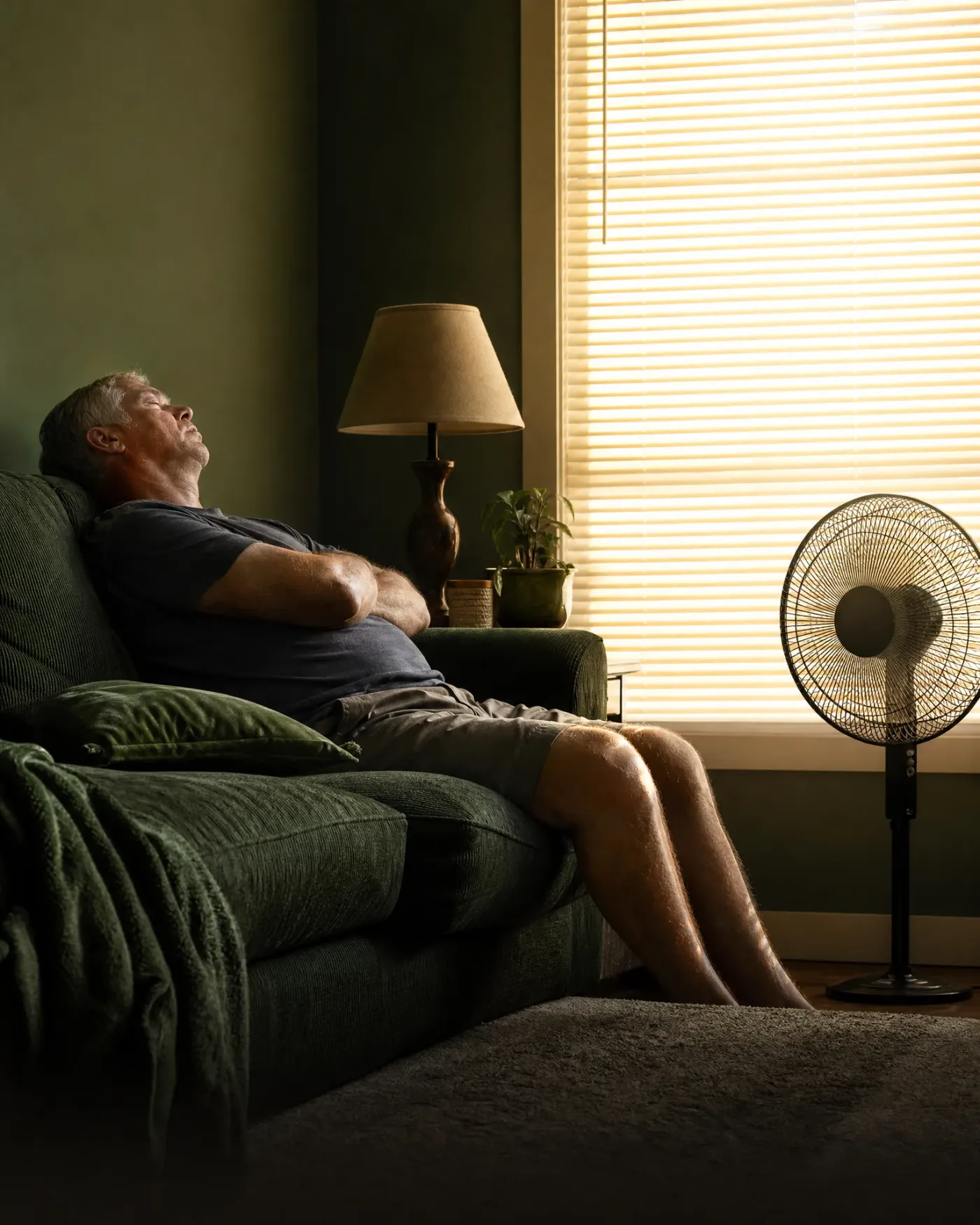
A gray-haired man in a dark long-sleeve shirt sits on a gray sofa in a living room, looking toward a sunlit window with sheer curtains.
A gray-haired man in a dark green sweatshirt sits on a sofa in a living room, looking toward a bright window, with a houseplant, lamp, fireplace and framed art behind him.
A gray-haired bearded man in a dark green collared sweater sits on a sofa in a living room with a window, houseplant, floor lamp and bookshelves, looking off to the side.
A gray-haired man in a dark green sweater sits on a sofa in a sunlit living room, looking off to the side, with a framed landscape painting, dining table and shelving behind him.

A pro who works on heat pumps

Your request goes to one pro, not a list of companies.

No fee to send it, and nothing to sign.

Most homes in Idaho heat with gas, so the heat pump usually only has to carry the load down to a certain outdoor temperature before the furnace takes over.

If yours won't start on a cold morning, that backup furnace likely picked up the heat anyway, which is why the house feels fine even though the outdoor unit never ran.

An outdoor air conditioning condenser unit on a concrete pad beside a house with horizontal siding above a brick foundation, with a flexible conduit running to a wall-mounted disconnect box.
Before you get your heat pump repair
An outdoor condenser unit on a concrete pad beside a gray lap-sided house, with an electrical disconnect box and conduit on the wall and shrubs with mulch to the right.
After you get your heat pump repair

You wait it out

The furnace keeps the house warm, so nothing feels urgent. But the heat pump sits idle, and whatever stopped it from starting won't fix itself by morning.

Connect with a pro

You get it looked at

A local contractor who works on heat pumps through Idaho winters checks what's keeping yours from starting and gets it back to carrying its share of the load.

Connect with a pro

Who should fix your heat pump

Call a general handyman

  • Heat pumps use refrigerant circuits and electrical controls that differ from basic appliance repair work.
  • Someone unfamiliar with heat pumps may replace a part that wasn't the problem and miss the one that was.
  • Idaho's cold mornings mean a misdiagnosis can leave you without backup heat working right either, since the systems are tied together.
  • Refrigerant handling requires certification, so a handyman without it legally can't touch that part of the system.
  • You may end up paying for a second visit from someone actually qualified to finish the job.

Call a licensed heat pump contractor

  • A contractor licensed for heat pumps knows the defrost cycle, the reversing valve, and the controls specific to this equipment.
  • Someone who services heat pumps through Idaho winters has likely seen the exact failure your unit is showing.
  • You get matched with one local contractor, not a handful of companies calling you at once.
  • A licensed contractor can legally handle the refrigerant and electrical work a heat pump repair often needs.
  • Local experience means they know how Idaho's cold mornings and gas backup systems affect what actually fails.
  1. Thermostat sends a call for heat to the control board outside.

  2. The control board checks for power and a safety fault first.

  3. The contactor closes to send power to the compressor.

  4. The compressor starts and the outdoor fan turns with it.

A woman with shoulder-length dark brown hair in a cream knit cardigan sits in an upholstered armchair beside a window, looking off to the side, with a white bookshelf and potted plant blurred behind her.
A woman with her hair in a bun sits wrapped in a beige knitted blanket on a couch, holding a sleeping child against her chest in a warmly lit room with a lamp and houseplant in the background.

Power costs 11.83 cents per kilowatt-hour statewide

At 11.83 cents a kilowatt-hour, running your heat pump costs less here than in most states, which is part of why it's paired with gas in the first place. When a repair gets it starting again, you're not looking at a steep power bill while it catches up.

EIA-861 2025 statewide residential average

A heat pump that won't start is almost always one failed part in the control or electrical path, not a reason to replace the system. Your gas furnace will keep the house warm in the meantime, but the heat pump should still get looked at before it's needed again on a harder cold snap. Someone local who works on heat pumps all winter has likely seen the same fault on another Idaho system this month, and knows which part tends to go first in weather like this. When you get matched, it's with one licensed contractor who takes on your case directly, not a handful of companies competing for the job. You end up with a straight answer about what failed and what it takes to get the outdoor unit running again.

Kitchen corner with cream upper cabinets, oak lower cabinets, white marble-look countertop, beige tile backsplash, a ceramic vase of greenery, a wooden cutting board and bowl, and a black-framed window at right.
Interior corner of a room with a white-framed window and wide sill, beige walls with panel molding, a wooden cabinet holding a ceramic vase with a green leafy plant, and blurred shrubs and trees outside.
A wood-framed armchair with beige cushions and a woven lumbar pillow sits in a corner beside a large window overlooking green trees, with a tall ceramic vase holding leafy branches on the left and plaster walls and wood flooring.
Interior corner with a white-framed window above a sill, beige walls with baseboard molding, a greige shaker-style cabinet with brass knobs and a potted plant on top, light wood flooring and a woven jute rug.
A dark-framed six-pane window with white trim and sill set in gray horizontal lap siding, with hydrangea shrubs below and a white column and shingled roof section at left.

The right pro for this job

Only one pro gets your request, so you hear from one company.

Find a pro near me

You're not committing to anything by asking.